From research question to reproducible result.

Describe an analysis in plain language. The agent prepares the inputs, proposes a run on a curated set of version-pinned Nextflow pipelines, and returns results with a complete record of how they were produced.

The route of an RNA-seq request The agent's line runs from the question through the sample sheet to review and approval, then continues as the default nf-core/rnaseq 3.27.0 route: FastQC, Trim Galore!, STAR, Picard MarkDuplicates, StringTie and bigWig, quality control and MultiQC. A branch after STAR runs Salmon quantification to the merged count matrices. Both lines end at the results and their methods record. Question Sample sheet Review and approval FastQC Trim Galore! STAR MarkDuplicates StringTie, bigWig RSeQC, Qualimap, dupRadar MultiQC Salmon Merged counts and TPM Results and methods record The agent nf-core/rnaseq 3.27.0, default route Quantification branch

Inspect results where they are produced

Structures, alignments, reports and tables open directly from a run or an analysis, with no download and no second tool. Files render in the browser, and HTML reports run in a sandbox with no network access.
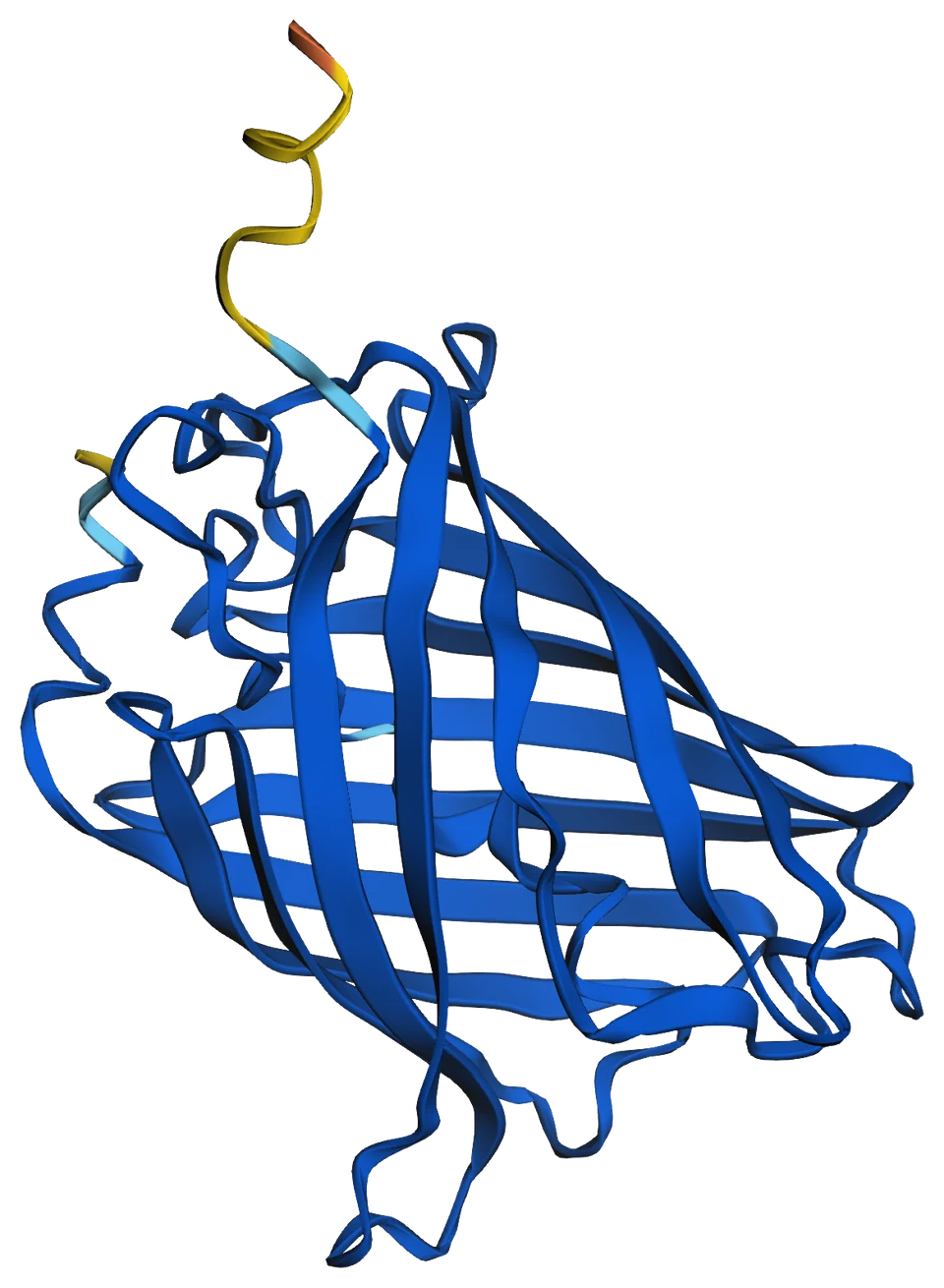
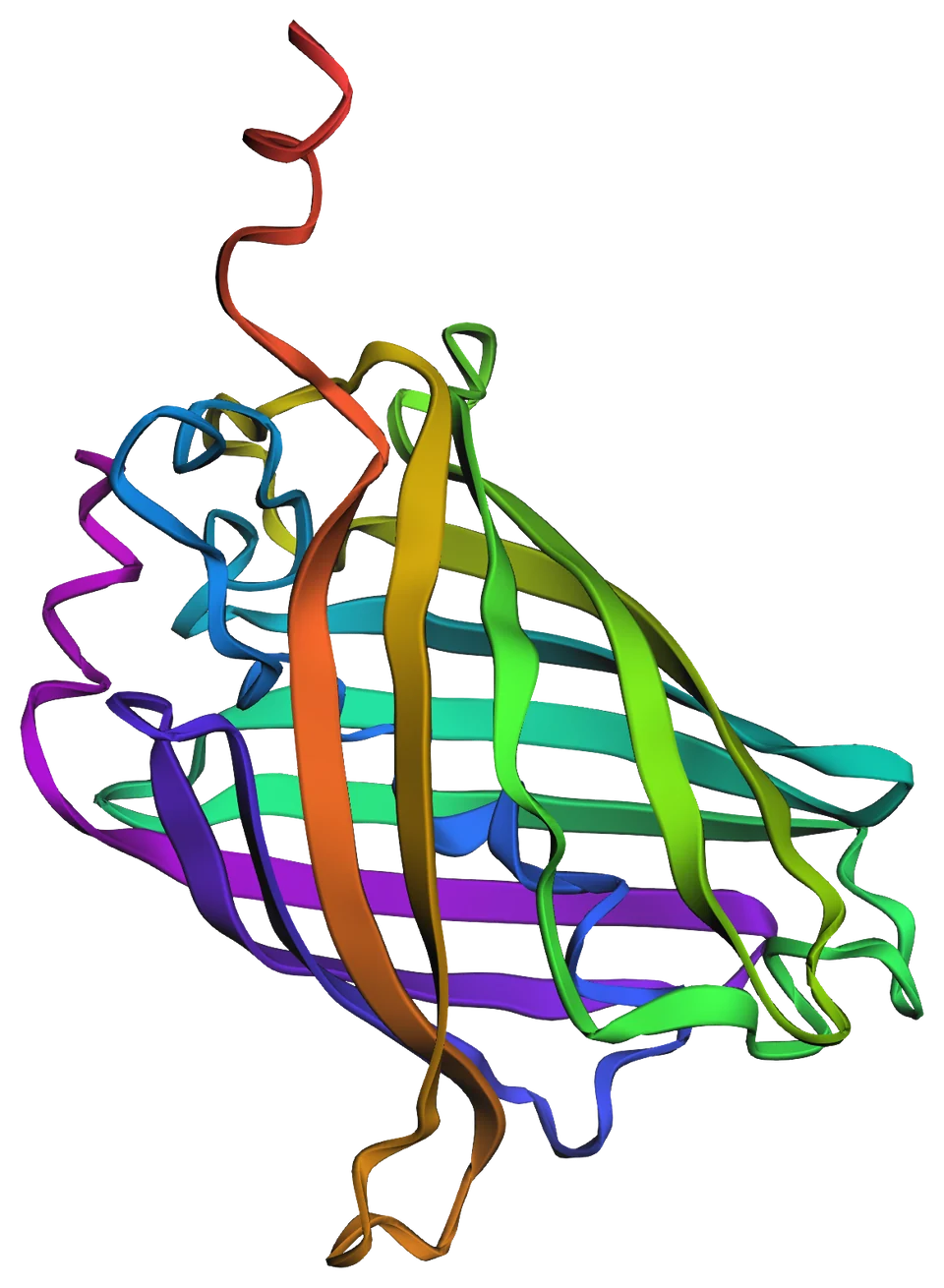
GFP_P42212.pdb colabfold/top_ranked_structures
Predicted structure of green fluorescent protein coloured by pLDDT: an eleven-stranded beta-barrel in dark blue, very high confidence, with a yellow and orange C-terminal tail of low to very low confidence rising from the top, and a short yellow N-terminal methionine on the left. The same predicted structure coloured along the chain, from violet at the N-terminus to red at the C-terminal tail.
  1. C-terminal tailResidues 231–238; with Met1, the only residues below pLDDT 70
  2. Ser65, Tyr66, Gly67Chromophore-forming residues on the central helix, inside the barrel
  3. Eleven-stranded β-barrel224 of 238 residues at pLDDT 90 or higher
  • Very high, 90 and above
  • Confident, 70–90
  • Low, 50–70
  • Very low, below 50

N-terminusC-terminus

Green fluorescent protein, UniProt P42212: the top-ranked of five ColabFold models, predicted on the workbench with the proteinfold pipeline and drawn with the same 3Dmol.js style and colours as the built-in viewer. 238 residues, mean pLDDT 95.9.
  • Rotate, zoom and recolourSwitch between pLDDT, spectrum and chain colouring; step through multi-model ensembles and docking poses.
  • Overlay related filesShow a docked ligand with its receptor, or a model inside its density map at an adjustable σ level.
Macromolecular structures
PDB, mmCIF, BinaryCIF, MMTF, GRO, PQR, PDBQT
Small molecules and maps
SDF, MOL2, MOL, XYZ, CCP4, MRC, DX, Cube
Sequence alignments
FASTA, Stockholm, A3M, Clustal
Residue-class colouring and a position ruler, up to 2,000 sequences.
Reports, tables and text
HTML, PDF, PNG, SVG, TSV, CSV, JSON, GFF, GenBank
MultiQC and Nextflow reports, figures, tables and logs. Compressed tables, text, alignments, structures and maps open directly.

Every result carries its own methods section

Each pipeline run and each custom analysis records what was executed, on which inputs, with which parameters and software, and on whose decision. The record stays attached to the result and exports as JSON.

  • Pinned code and referencesPipeline release and commit, Nextflow version, reference build and annotation.
  • Parameters with their originEach value labelled as set by the researcher, the server policy or the reference.
  • Inputs, checksums and lineageSHA-256 for sample sheets and for custom-analysis scripts, inputs and outputs; size and timestamp for run input files; links to the runs that produced each input.
  • Software and the exact commandContainer images per process, tool versions and the Nextflow command as executed.
  • Custom analyses includedThe method in plain language, the full script, package versions, and whether each output is still as recorded.
How this was produced Example record, nf-core/rnaseq
Pipeline
nf-core/rnaseq 3.27.0 at its pinned commit
Nextflow
25.10.4
Reference
GRCh38 primary assembly, GENCODE v50
Where
CPU compute VM, us-central1-a
Decision
Approved by the researcher at 14:02 UTC
Parameters and who set them
save_trimmedtrueResearcher
fastaGRCh38.primary_assembly.faReference
alignerstar_salmonServer
inputsamplesheet.csvServer

Answers grounded in citable sources

When a question calls for literature or documentation, the agent searches a curated list of scientific sources. Every cited page is traceable to a search the agent ran in that conversation.

Agent Example answer

Which strandedness setting fits a TruSeq Stranded mRNA library?

For dUTP-based kits such as TruSeq Stranded mRNA, read 1 maps to the antisense strand, which nf-core/rnaseq calls reverse (nf-core/rnaseq usage). The setting can also stay at auto, in which case the pipeline infers strandedness with Salmon on a subsample of reads (nf-core/rnaseq usage, Salmon, PubMed). Users report, as community opinion, that inference is reliable at typical sequencing depths (Biostars).

Sources

  1. nf-core/rnaseq: Usagenf-co.re, nf-core documentation
  2. Salmon provides fast and bias-aware quantification of transcript expressionncbi.nlm.nih.gov, PubMed
  3. Inferring library strandedness from RNA-seq readsbiostars.org, Biostars Community opinion

9 other results from this search

  • Numbered sources under each answerAssembled by the server from the saved search results, so they are identical after a reload.
  • Links only to retrieved pagesA link is clickable only if a search returned that page; any other link is flagged as not verified.
  • Community content labelledForum and Q&A material is marked as community opinion, distinct from the literature.
  • PubMed and PMC
  • Europe PMC
  • bioRxiv
  • UniProt
  • EMBL-EBI
  • GTDB
  • nf-core and Nextflow docs
  • Biostars

A curated, version-pinned pipeline catalogue

The agent runs only pipelines that have been reviewed and configured for this service, each pinned to one release, reference and set of containers. The conversation sets parameters; it does not change the method.

Transcriptomics

  • rnaseqBulk RNA-seq quantification, human GRCh38nf-core 3.27.0

Metagenomics

  • taxprofilerTaxonomic profiling of shotgun readsnf-core 2.0.1
  • magGenome-resolved metagenomicsnf-core 5.5.0
  • funcscanFunctional screen of contigs and binsnf-core 4.0.0

Genomes and proteins

  • prokkaProkaryotic genome annotationin-house 1.0.0
  • blastpProtein search against Swiss-Protin-house 1.0.0
  • diamond-uniref90Fast protein search against UniRef90in-house 1.0.0
  • pfamscanPfam domain annotationin-house 1.0.0
  • proteinannotatorDomains and secondary structurenf-core 1.1.0
  • proteinfamiliesBuild and extend protein familiesnf-core 2.6.0

Structure and phylogeny

  • proteinfoldColabFold structure prediction on GPU; sequences go to the public ColabFold MSA servernf-core 2.0.0
  • proteinfoldESMFold single-sequence prediction; sequences stay on the lab's machinenf-core 2.0.0
  • phyloplacePlace sequences on a reference treenf-core 2.3.0

Your dedicated computing resources

Each lab is provisioned with its own cloud machines rather than a slot in a shared cluster queue. A machine is created when a run is cleared to start (after the researcher's approval in manual mode, the default), runs the pipeline against the lab's data, and is released once it has been idle for 30 minutes.

CPU compute

Most pipelines

48 vCPU

Memory
240 GB
Local NVMe scratch
750 GB
Ready in
2–4 min

GPU compute

Structure prediction

NVIDIA RTX PRO 6000

GPU memory
96 GB
CPU and memory
48 vCPU, 180 GB
Provisioned
On demand

Lab workspace

Always on

Private by default

Files, conversations and run history
Retained
Finished results
Cloud storage
Sign-in
Invitation only
What happens when a run is cleared to start
  1. Cleared to run0 min
  2. Machine created2–4 min
  3. Pipeline runsOn your data
  4. Results archivedCloud storage
  5. Machine releasedAfter 30 idle min

Compute exists only while analyses need it. Idle machines are released automatically, and the workbench shows the hourly rate and the time remaining before shutdown. ColabFold is the one pipeline that sends sequences to an outside service; use ESMFold for unpublished sequences.

Get access today

02AI Workbench is available to research groups by invitation. Once a lab is onboarded, each invited member receives an individual account with their own conversations, run history and access to the lab's dedicated compute.

  1. Request an invitationYour lab administrator adds you to the workspace.
  2. Set your passwordOpen the invitation link within seven days and choose a password.
  3. Start your first analysisDescribe the question and the data; the agent proposes a run for your review.